
Proximal Humerus Fractures
Expert Care for Shoulder Fractures in Miami, Doral & South Florida
A proximal humerus fracture, or fracture of the upper arm bone near the shoulder, can cause severe pain, swelling, and significant loss of shoulder function. These injuries commonly occur after falls, sports injuries, or motor vehicle accidents and may require either non-surgical treatment or advanced surgical repair depending on the severity of the fracture. Dr. Rafael Sanchez, a fellowship-trained orthopedic surgeon specializing in shoulder surgery and sports medicine, provides comprehensive care for proximal humerus fractures throughout Miami, Doral, Coral Gables, Kendall, and South Florida.
From accurate diagnosis to personalized treatment and rehabilitation, Dr. Sanchez utilizes evidence-based techniques to restore shoulder stability, relieve pain, and maximize long-term function. Whether your injury can be managed conservatively or requires fracture fixation or shoulder replacement, your treatment plan will be tailored to your individual needs and recovery goals.
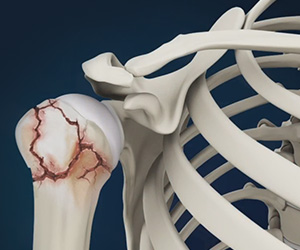
What is Anatomy of the Humerus?
The humerus is the bone that forms the upper arm. It articulates with the glenoid cavity of the scapula (shoulder blade) to form the shoulder joint and with the lower arm bones – the ulna and radius – to form the elbow joint. The proximal humerus is the upper end of the arm bone that forms the shoulder joint. The humerus is broadly divided into the head, neck and shaft region. Just below the head are two processes called the greater and lesser tubercles, which form the sites of attachment for the rotator cuff muscles.
What are the Causes of Proximal Humerus Fractures?
Fractures of the proximal humerus are common in elderly individuals suffering from osteoporosis. In younger individuals, a severe trauma such as a fall from a height on an outstretched hand or motor vehicle accident can cause these fractures.
What are the Types of Proximal Humerus Fractures?
Proximal humerus fractures can be categorized into 4 groups:
Humeral head fractures: Humeral head fractures very often occur in elderly individuals and chances are more in those with osteoporotic bone. While mild trauma can break humeral head in the elderly, a more significant trauma results in its fracture in the young.
Surgical neck fractures: Fractures of the surgical neck are most common in osteoporotic bone. These fractures also damage the axillary nerve that carries sensory information from the shoulder.
Greater tuberosity fractures: Greater tuberosity fractures are less common and are seen in cases of shoulder dislocations and in those with osteoporosis. A fragment of the greater tuberosity is pulled off when the cuff muscle contracts or the anterior shoulder dislocates. Direct impact on the shoulder causes the tuberosity bone to break into multiple fragments. Partial rotator cuff tears often accompany non-displaced fractures and these fractures can be diagnosed using MRI or diagnostic arthroscopy.
Lesser tuberosity fractures: These fractures are often caused by posterior shoulder dislocations or traumatic muscle contractions by electrical shock or convulsions. If left untreated, these fractures can cause subscapularis muscle (stabilizer and mobilizer muscle) deficiency and require a major muscle transfer procedure.
In addition to the above, other types of proximal humerus fractures are two, three and four-part fractures. A fracture causes multiple fragmentations of the proximal humerus.
What are the Symptoms of Proximal Humerus Fractures?
You may experience severe pain, swelling and restricted motion of the shoulder.
How is a Proximal Humerus Fracture Diagnosed?
A proximal humerus fracture is diagnosed by a physical examination, X-ray of the affected area and/or computerized tomography (CT) scan.
How are Proximal Humerus Fractures Treated?
Most proximal humerus fractures are minimally displaced and can be treated with conservative approaches such as the use of a sling to immobilize your arm and early physical therapy to improve the functional outcome. Surgery may be necessary for displaced fractures. The multiple fragments are fixed with plates, screws or pins, and in severe cases, shoulder replacement surgery is performed.
Why Choose Dr. Rafael Sanchez for Proximal Humerus Fracture Treatment in Miami, Doral & South Florida?
Dr. Rafael Sanchez is a fellowship-trained orthopedic surgeon with advanced expertise in shoulder surgery, fracture care, sports medicine, and complex reconstructive procedures. He treats a wide range of shoulder fractures, including simple and complex proximal humerus fractures, with an emphasis on restoring shoulder function while minimizing long-term complications.
Patients throughout Miami and South Florida choose Dr. Sanchez because he offers:
- Fellowship-trained expertise in shoulder fracture care and reconstruction
- Comprehensive evaluation of traumatic shoulder injuries
- Advanced surgical and non-surgical treatment options
- Modern fracture fixation techniques using plates, screws, and pins when appropriate
- Expertise in shoulder replacement for complex fractures when indicated
- Personalized rehabilitation programs to restore mobility and strength
- Compassionate, patient-centered care focused on achieving the best possible recovery
Dr. Sanchez is committed to helping patients regain shoulder function, reduce pain, and safely return to their daily activities following a proximal humerus fracture.
Proximal Humerus Fracture FAQs
A proximal humerus fracture is a break in the upper portion of the arm bone (humerus) near the shoulder joint. It commonly occurs after a fall, sports injury, or motor vehicle accident.
Common symptoms include severe shoulder pain, swelling, bruising, limited range of motion, tenderness, and difficulty lifting or moving the arm.
Diagnosis begins with a physical examination and typically includes X-rays. In some cases, a CT scan or MRI may be recommended to better evaluate the fracture pattern and any associated soft tissue injuries.
No. Many minimally displaced fractures heal successfully with conservative treatment, including sling immobilization, pain management, and physical therapy. Surgery is generally recommended for displaced, unstable, or complex fractures.
Depending on the fracture, surgery may involve fixation with plates, screws, or pins. In certain severe or highly fragmented fractures, shoulder replacement surgery may be the most appropriate treatment option.
Recovery depends on the severity of the fracture and the treatment performed. Many patients begin physical therapy within a few weeks, while complete healing and restoration of strength may take several months.
Yes. Physical therapy is an important part of recovery and helps restore shoulder flexibility, strength, range of motion, and overall function after both surgical and non-surgical treatment.
Schedule a Proximal Humerus Fracture Consultation in Miami, FL
If you've experienced a shoulder fracture after a fall, sports injury, or accident, prompt evaluation is essential to ensure proper healing and restore shoulder function. Dr. Rafael Sanchez provides expert diagnosis and personalized treatment for proximal humerus fractures, serving patients throughout Miami, Doral, Coral Gables, Kendall, and South Florida.
Contact our office today to schedule a consultation with Dr. Rafael Sanchez and learn more about your treatment options for proximal humerus fractures in Miami, FL.
Patient Services and Care Coordination
Our team can assist with appointments and general inquiries.