
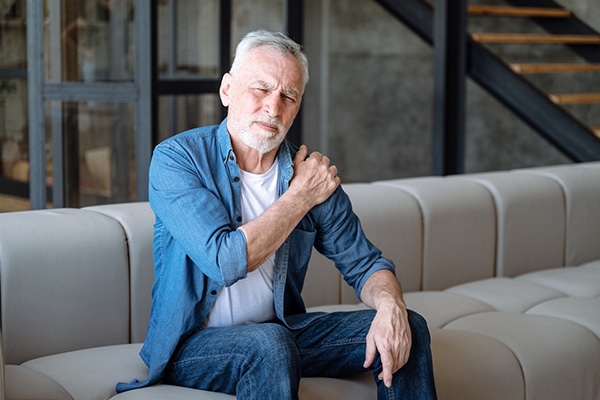
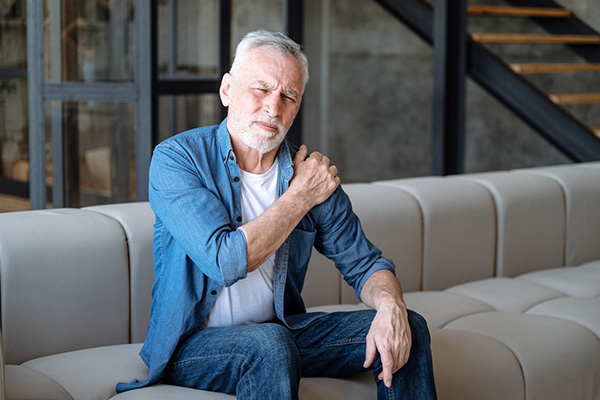
When shoulder arthritis turns everyday reaching, lifting, and sleeping into a struggle, you may start wondering whether a new joint is the answer. Shoulder replacement has evolved considerably, and today there is more than one design to consider. This article helps you understand when to see a shoulder replacement surgeon in Doral or Miami, how anatomic and reverse shoulder replacement differ, and what to weigh as you consider your options.
Signs That Arthritis May Be Behind Your Shoulder Pain
Arthritis of the shoulder causes pain and stiffness that can make it hard to lift your arm, brush your hair, or reach a high shelf. The pain usually worsens with activity and progresses over time. When the main shoulder joint is affected, you may feel a deep ache in the side or back of your shoulder that intensifies with weather changes. As arthritis advances, night pain becomes common, motion becomes limited, and you may hear grinding or clicking as you move.1
Types of Arthritis That Affect the Shoulder
Five major types of arthritis typically affect your shoulder:1
- Osteoarthritis, the wear and tear form that usually appears after age 50
- Rheumatoid arthritis, an autoimmune disease that tends to affect both sides of the body
- Posttraumatic arthritis, which develops after a fracture or dislocation
- Rotator cuff tear arthropathy, which follows a large, long standing rotator cuff tear
- Avascular necrosis, which occurs when the blood supply to the top of the upper arm bone is disrupted
Starting With Nonsurgical Care
Initial treatment for shoulder arthritis is nonsurgical. Rest or activity changes, physical therapy, anti inflammatory medicine, moist heat, and ice can all help, and corticosteroid injections can dramatically reduce pain, although the effect is often temporary.1 Ultrasound guided shoulder injections help place medicine precisely within the joint.
When Should You See a Shoulder Replacement Surgeon in Doral or Miami?
Surgery becomes worth considering when pain causes disability and does not respond to nonsurgical treatment.1 Shoulder joint replacement may be recommended when medication, injections, physical therapy, and activity changes no longer relieve your symptoms, and you have:
- Severe shoulder pain that restricts your daily activities
- Moderate to severe pain while resting
- Weakness or loss of motion
A shoulder replacement surgeon in Doral or Miami will review your history, examine your shoulder, and order imaging such as X-rays or an MRI to decide which approach fits your situation.
Your Shoulder Replacement Options
Anatomic Total Shoulder Replacement
An anatomic shoulder replacement mimics the natural shape of your shoulder: a metal ball replaces the top of the upper arm bone, and a plastic cup lines the socket.2 This design depends on a healthy rotator cuff to position and power your arm, so it is generally best suited to arthritis with an intact cuff.2 Stemmed and stemless implant designs are both available.
Reverse Shoulder Replacement
In a reverse shoulder replacement, the ball and socket are switched. The metal ball attaches to the socket, and the plastic cup attaches to the upper arm bone.2 This arrangement relies on the large deltoid muscle instead of the rotator cuff to move your arm, which is why it works better when the cuff is damaged or torn.1,2
Reverse replacement may be recommended if you have:
- Shoulder arthritis together with a torn rotator cuff that cannot be repaired
- Cuff tear arthropathy
- A complex fracture of the shoulder joint
- A previous shoulder replacement that was unsuccessful
- A chronic shoulder dislocation2
The U.S. Food and Drug Administration approved reverse total shoulder replacement in 2003, and the vast majority of shoulder replacements performed in the U.S. are now reverse designs.2
Other Approaches
In some cases, only the top of the upper arm bone is replaced, a procedure called hemiarthroplasty.1 For arthritis limited to the top of the shoulder, removing a small amount of bone from the end of the collarbone may be an option.1 If an earlier implant has worn or failed, revision shoulder replacement can address the problem. Depending on your health, an outpatient shoulder replacement may allow you to return home within 24 hours of surgery.
What Recovery May Look Like
After shoulder replacement, your arm rests in a sling, and physical therapy begins soon after surgery to restore mobility and strength. After a reverse replacement, you should be able to eat, dress, and groom yourself within a few days, but you will need to avoid lifting anything heavier than 5 pounds for the first six weeks.2 You may return to gentle daily activities within two to six weeks, and implants often last 15 to 20 years.
As with any surgery, risks include infection, bleeding, blood clots, nerve or blood vessel injury, implant wear or loosening, and dislocation.1,2 Your surgeon will discuss these with you so you can make a well informed choice.
Frequently Asked Questions
What is the difference between anatomic and reverse shoulder replacement?
An anatomic replacement copies your natural ball and socket and relies on a healthy rotator cuff. A reverse replacement switches the ball and socket so the deltoid muscle powers your arm instead.2
Who is a good candidate for reverse shoulder replacement?
Reverse replacement is often recommended when arthritis occurs with a damaged or irreparable rotator cuff. It may also be used for complex fractures and failed prior replacements.2
How long does a shoulder replacement last?
Shoulder implants often last 15 to 20 years. Longevity depends on your activity level, bone quality, and the type of implant used.
Can you have shoulder replacement as an outpatient in Doral or Miami?
Yes, outpatient shoulder replacement may be an option for you in Doral or Miami, allowing you to return home within 24 hours. Your surgeon will determine whether same day discharge is appropriate for your health.
Will you be able to lift your arm overhead after a reverse shoulder replacement?
After rehabilitation, you will most likely be able to lift your arm above shoulder height. Pain relief and satisfaction are typically high.2
Choosing the Path That Fits Your Life
Shoulder arthritis does not have to define your days. Understanding the differences between your options helps you choose a plan that matches your goals and activity level. When you are ready to discuss your shoulder, you can schedule a consultation in Doral or Miami.
References
- American Academy of Orthopaedic Surgeons. Arthritis of the Shoulder. OrthoInfo. https://www.orthoinfo.org/en/diseases--conditions/arthritis-of-the-shoulder/
- American Academy of Orthopaedic Surgeons. Reverse Total Shoulder Replacement. OrthoInfo. https://www.orthoinfo.org/en/treatment/reverse-total-shoulder-replacement/
Dr. Rafael Sanchez, MD, FAAOS, is a board-certified, fellowship-trained orthopedic sports medicine surgeon serving Miami and Doral. He earned his medical degree at Georgetown University and completed a five-year orthopedic surgery residency at Jackson Memorial Hospital. His traveling sports medicine fellowship took him to train with leading sports medicine and shoulder surgeons in New York, Denver, Vail, and Connecticut. A former athlete, he helps active patients get back to activities they love.