
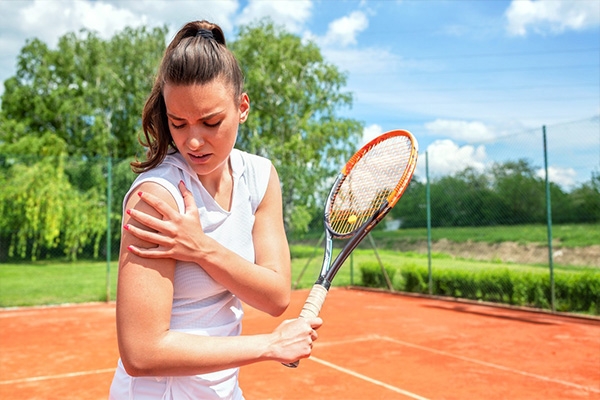

Whether you play weekend tennis, swim laps, or train for your next race, an injury can pull you off the field quickly. Some injuries announce themselves with sudden pain, while others build slowly through repetition until a familiar motion starts to hurt. This article shows how a sports medicine specialist in Doral or Miami can help you understand your injury, protect healing tissue, and plan a safe return to play.
How Common Are Sports Injuries?
Sports injuries are a significant public health concern. A national survey estimated that seven million Americans receive medical attention for sports and recreation injuries each year, with strains and sprains accounting for 31 percent of those episodes.1 These injuries are not limited to athletes, either. Painters develop shoulder injuries, gardeners develop tendinitis, and factory workers develop tennis elbow, all through the same kinds of repetitive motion.2
Sudden Injuries Versus Overuse Injuries
Sports injuries generally fall into two groups. Acute injuries happen suddenly, such as when you fall, take a blow, or twist a joint; sprains and dislocations are common examples. Chronic injuries develop gradually from repetitive loading, as with tennis elbow or stress fractures. Over time, wear from an overuse injury can also set the stage for an acute injury.2
Several factors raise your risk, including poor technique, overtraining, increasing intensity too quickly, playing the same sport year round, wearing improper equipment, and having a prior injury.2
Shoulder Injuries in Overhead Athletes
Your shoulder is particularly vulnerable when your sport demands repeated overhead motion. Baseball, football, tennis, volleyball, and swimming place tremendous force across the joint, which is why the overhead athlete's shoulder faces a higher risk of injury from poor technique, training errors, and muscle imbalance.
Common shoulder problems in athletes include:
- Rotator cuff injuries. Tennis players and baseball pitchers are especially vulnerable to overuse tears.3 A rotator cuff tear often causes night pain and weakness when you lift your arm.
- Impingement. Repeated overhead strokes, such as those used in swimming, increase the risk of tendinitis and bursitis beneath the top of the shoulder blade.2
- Instability. Once the labrum and ligaments stretch or tear, shoulder instability can lead to repeated dislocations.2
- Labral injuries. SLAP tears affect the top of the labrum and often cause pain and catching with throwing.
Elbow Injuries From Throwing and Racket Sports
The elbow absorbs significant stress with every throw and swing. Tennis elbow involves small tears and inflammation of the tendons on the outside of the elbow, while golfer's elbow affects the inner side.2 Repeated throwing can lead to throwing injuries of the elbow, including inflammation or tears of the ulnar collateral ligament, irritation of the ulnar nerve, and stress fractures. These injuries can cause pain, numbness, tingling, and a drop in throwing velocity. When nonsurgical care no longer helps a torn ligament, UCL reconstruction, also called Tommy John surgery, may restore elbow stability.
Knee Injuries in Brief
Knee injuries are also common in sports that involve pivoting, cutting, and jumping. Ligament tears, meniscal tears, and cartilage damage are among the injuries a sports medicine specialist evaluates, and care for knee sports injuries often begins with rest, ice, compression, and elevation.
How a Sports Medicine Specialist in Doral or Miami Helps
A sports medicine specialist focuses on restoring function and getting you back to the activities you enjoy safely. Your care in Doral or Miami typically includes:
A Thorough Evaluation
Your visit starts with your history, the demands of your sport, and a physical exam of strength, range of motion, and stability. Imaging such as X-rays or an MRI may confirm the diagnosis.
Nonsurgical Treatment
Many sports injuries can be treated at home with rest, ice, compression, and elevation, while more serious injuries may call for physical therapy, a brace, or a splint.2 Therapy focused on sports performance can build strength, flexibility, and movement efficiency, and biomechanical analysis can identify motion patterns that place extra strain on your joints. For certain injuries, regenerative medicine for sports injuries, including platelet rich plasma (PRP) therapy, may help reduce pain and support healing.
Surgery When It Is Needed
Some injuries do not respond to conservative care. In those cases, minimally invasive procedures such as shoulder arthroscopy allow your surgeon to repair damaged tissue through small incisions.
Returning to Play Safely
A rehabilitation program that includes exercise and other therapy is usually recommended before you resume the activity that caused your injury.2 Returning too soon can increase the chance of a repeat injury, so your plan should progress gradually based on how your body responds. Small changes to your technique, training schedule, and equipment can also help protect you over the long term.
Frequently Asked Questions
When should you see a sports medicine specialist instead of resting at home?
You should be evaluated if you have sudden severe pain, significant swelling, a joint that looks out of place, or an inability to move a joint normally. Pain that returns every time you play also deserves attention.2
Can a sports medicine specialist in Doral or Miami help if you are not a competitive athlete?
Yes, sports medicine care is for you as long as you are active. Weekend athletes, gardeners, painters, and others with repetitive motion injuries benefit from the same evaluation and treatment.2
What are the most common sports injuries?
Strains and sprains are the most common, making up 31 percent of sports and recreation injury episodes in one national survey.1 Shoulder, elbow, and knee injuries are also frequent.
Do most sports injuries require surgery?
No, many sports injuries improve with rest, ice, compression, elevation, physical therapy, or bracing. Surgery is generally considered when conservative care does not restore function.2
How can you lower your risk of a sports injury?
Using proper technique, increasing intensity gradually, wearing the right equipment, and avoiding year round play of a single sport can all help reduce your risk.2
Staying in the Game
An injury does not have to mean stepping away from the sport you love for good. With an accurate diagnosis and a plan built around your goals, you can work toward a confident return. When you are ready, you can book a visit in Doral or Miami.
References
- Conn JM, Annest JL, Gilchrist J. Sports and recreation related injury episodes in the US population, 1997-99. Inj Prev. 2003;9(2):117-123. https://pubmed.ncbi.nlm.nih.gov/12810736/
- National Institute of Arthritis and Musculoskeletal and Skin Diseases. Sports Injuries. https://www.niams.nih.gov/health-topics/sports-injuries
- American Academy of Orthopaedic Surgeons. Rotator Cuff Tears. OrthoInfo. https://www.orthoinfo.org/en/diseases--conditions/rotator-cuff-tears/
Dr. Rafael Sanchez, MD, FAAOS, is a board-certified, fellowship-trained orthopedic sports medicine surgeon serving Miami and Doral. He earned his medical degree at Georgetown University and completed a five-year orthopedic surgery residency at Jackson Memorial Hospital. His traveling sports medicine fellowship took him to train with leading sports medicine and shoulder surgeons in New York, Denver, Vail, and Connecticut. A former athlete, he helps active patients get back to activities they love.